
By Eliot Shiner
21 May 2025 · 9 Min Read
Dave, our Head of Paid Media, and I had the pleasure of representing Bind Media and attending Google Marketing Live in Dublin last week.
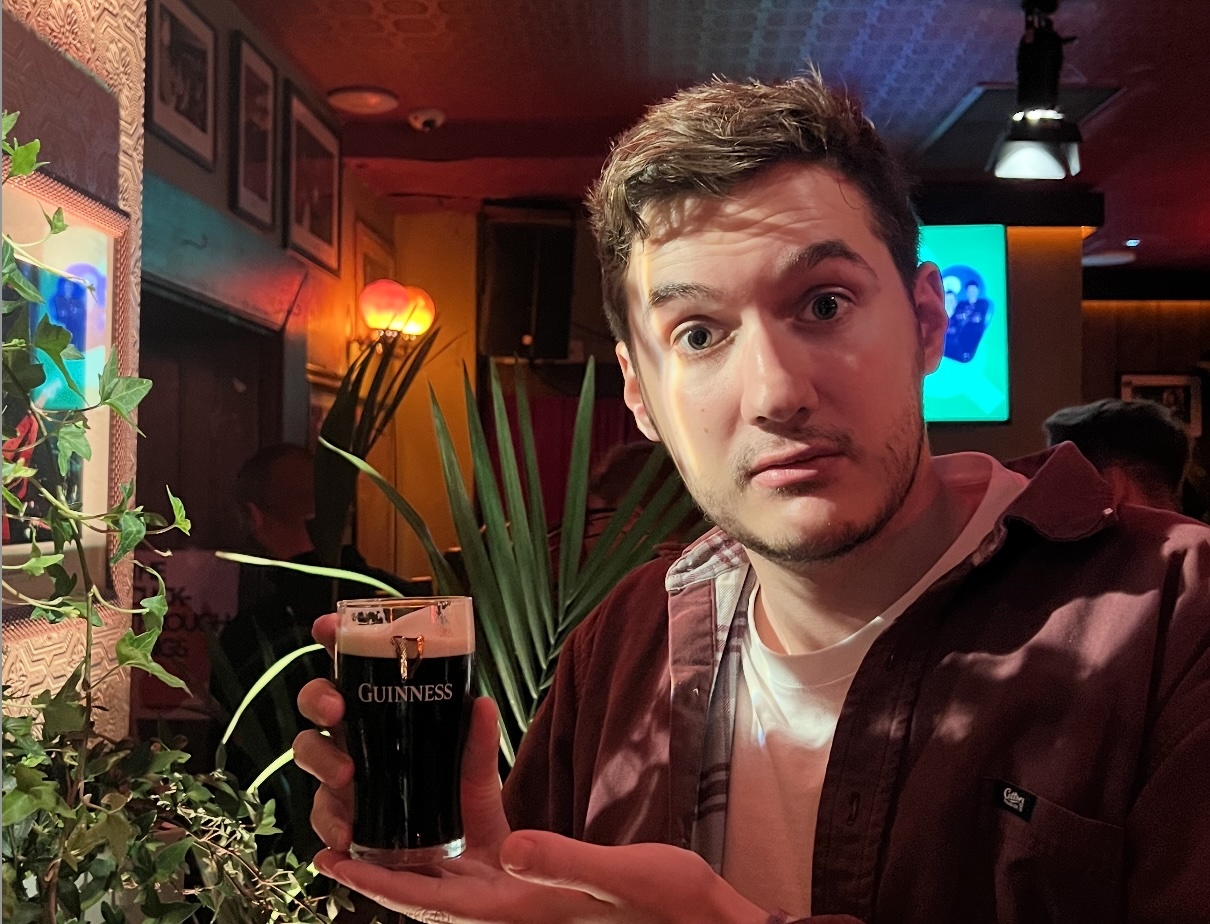
And here's Dave enjoying an obligatory mini-Guinness after the first evening's keynote:
Anyway, the announcements from GML were, as one might expect, heavily tailored towards implementation of their latest AI innovations across the Google marketing platforms.
But before we dive into the highlights and key takeaways...
A quick recap of Google I/O.
Less than 24 hours prior to the event, Google I/O came with its own share of impressive updates (roughly 100, if you can believe it).
These ranged across their expansive technologies, whilst the most prominent announcement in the world of marketing was no doubt 'AI Mode in Search'.
AI Mode in Search.
This exciting new feature allows you to search and converse with Google's Gemini 2.5 model, in order to turn complex search queries into relevant, personalised results. Here's how Google describe it:
"Under the hood, AI Mode uses our query fan-out technique, breaking down your question into subtopics and issuing a multitude of queries simultaneously on your behalf. This enables Search to dive deeper into the web than a traditional search on Google, helping you discover even more of what the web has to offer and find incredible, hyper-relevant content that matches your question."
The feature rolled out fully in the US this week, with more markets to follow.
Additionally, 'Deep Search' functionality (which I would liken to Open-AI's 'Deep Research') uses the same concept, but with a more extensive fan-out technique to return an 'expert-level' report based on your query.
Does it live up to the hype? The reviews are a mixed bag, with the New York Times reporting it "excels at tasks like product research for online shopping. But it falls short on basic web searches".
No doubt it will improve, and it will no doubt be interesting to hear how well it's adopted. With 52% of U.S. adults already using LLMs on a daily basis, it doesn't feel like a stretch to say this will eventually rival or perhaps even overtake traditional search functionality.
AI Overviews.
AI Overviews on search are also due to be featured more prominently (I would argue very prematurely, based on some of the nonsense it still seems to be returning). Ironically, here's what Google had to say:
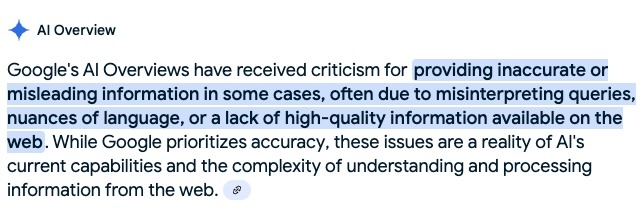
Both AI Mode and AI Overviews have been met by a juxtaposition of excitement and deep controversy across the industry. Many are celebrating the speed and relevancy in which information can be organised and returned, whilst others have gone as far as to label it 'theft'.
In particular, the News Media Alliance have stated its "further depriving publishers of original content both traffic and revenue". After all, this data is trained on content that was ultimately written with the purpose of driving users to a brands website for subsequent monetisation, in some way shape or form.
Regardless, this shift signals further transition toward Google delivering information to users directly in the SERPs (as has been the case for many years with 'position zero'), reducing the propensity of traffic being driven to webpages by Google organically, at least for informational and news based results.
A third interesting update worth mentioning is the integration of Project Astra's capabilities into search via Google Lens - which was said to currently be utilised by over 1.5 billion people a month.
This feature allows you to identify what you're seeing, search, find visually similar images and even translate with your camera.
Android users will have no doubt seen the 'Circle to Search' feature, allowing them to simply draw around a particular item on their screen and use this technology in the way described above.
So what about GML 2025?
As always, the event kicked off with a keynote talk from leading representatives at Google, who spoke through the latest product announcements and upcoming changes.
The theme last year was very much focused around AI, and this year was certainly no exception - albeit, it does feel as though there is more to show about how Google plan to integrate and further rollout their latest AI innovations such as Gemini, Lens and Veo across the Google Ads ecosystem.
Teeing up the theme for this year was the concept of how consumer behaviour has and continues to evolve with technology and multi-modal experiences, framed around the four S’s:
Search, Scroll, Stream and Shop.
Couldn't help but remind me of this scene from Dodgeball...
Users are now increasingly discovering, researching, evaluating and even purchasing products in ways they didn't before. To paraphrase Google - "the traditional marketing funnel approach is dead".
But generally, at least online, they are doing one of those four things.
Not exactly revolutionary but it dovetailed nicely into their proposed strategy and a cornerstone of the announcement...
The ‘Power Pack’.
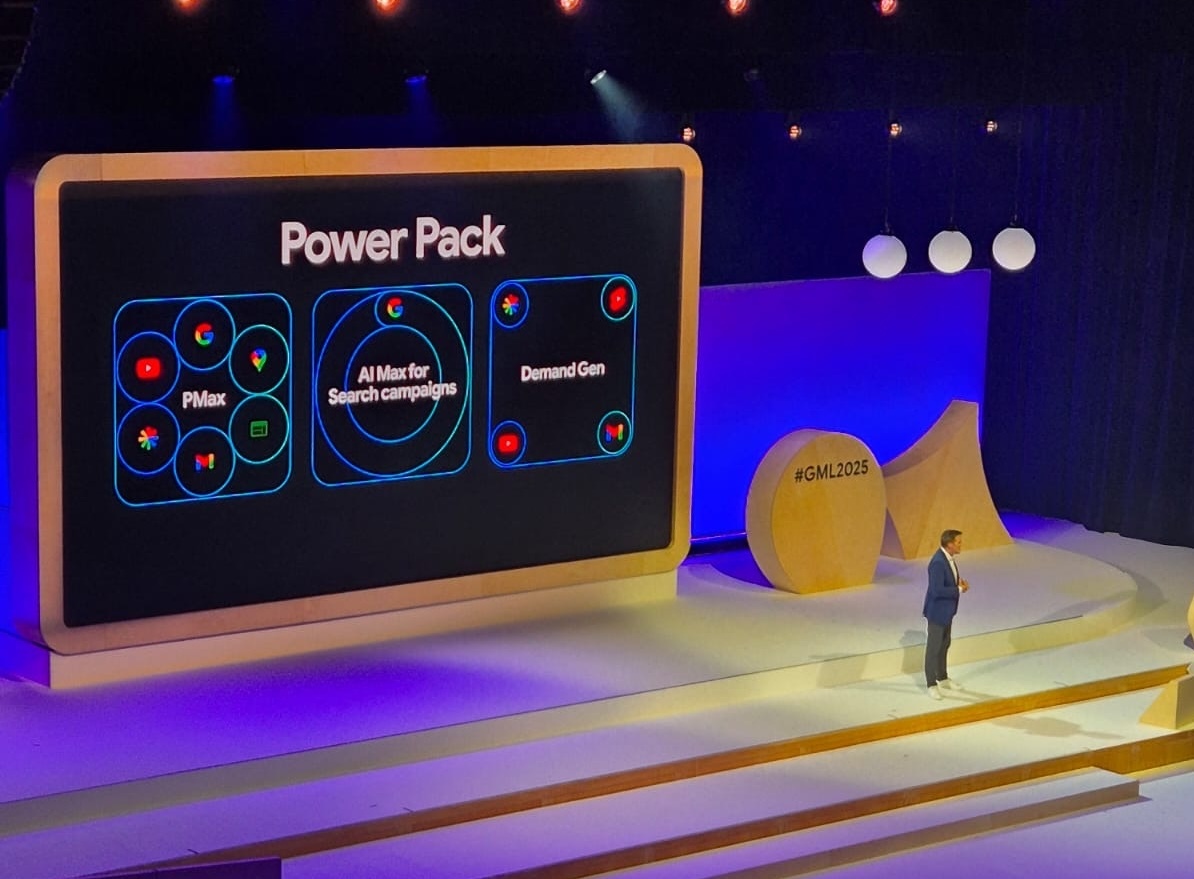
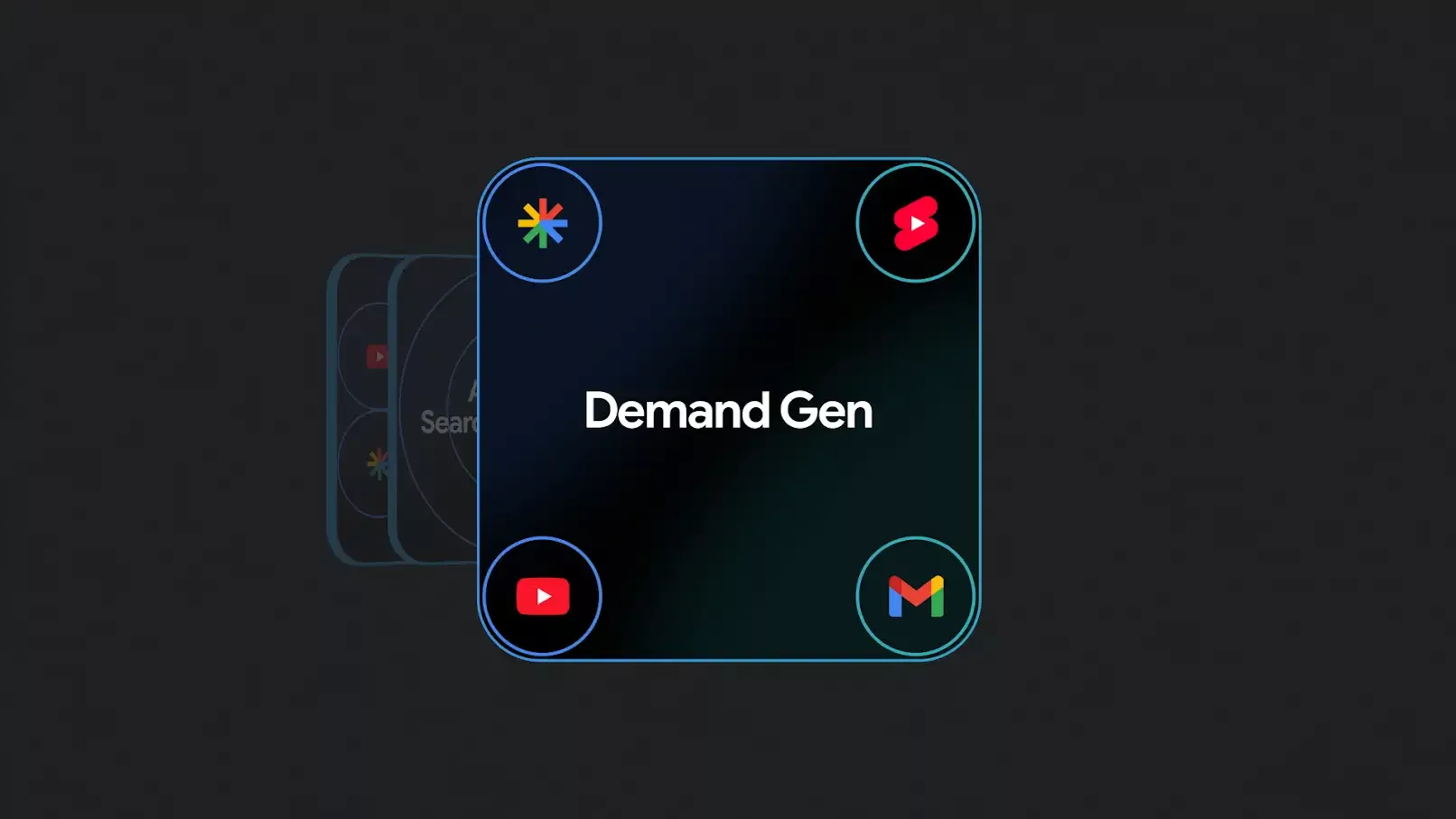
AKA: PMax, AI Max for Search Campaigns & Demand Gen.
Only last year, Google were pushing the 'Power Pair' (Broad Match & PMax).
But advertisers have been frustrated by the lack of control and visibility into PMax.
AI Max for Search is set to provide the same functionality of how PMax would operate through Search via Final URL expansion, but with the visibility and control that was previously lacking. It's also something you can enable with a single toggle of a button in the campaign settings.
Google claim that it is possible for the two to simultaneously compete for the auction, much like Search and PMax have historically. As was the case in those circumstances, the same rules still apply.
Here are our key takeaways from the event:
1. AI-powered search is the new standard.
As demonstrated across both events, Google is moving beyond keyword-based search, and here are the things you need to know:
- AI overviews and AI mode, now rolling out across desktop and mobile in 200+ countries.
- Ads in AI Overviews is already rolled out in the US for mobile only, with ads in AI mode to follow soon.
- AI mode - rich with context, personalisation and the ability to transform search into a conversational experience that delivers better, more relevant information, suggestions and experiences (the theme here was 'turning search intent into conversions' more seamlessly).
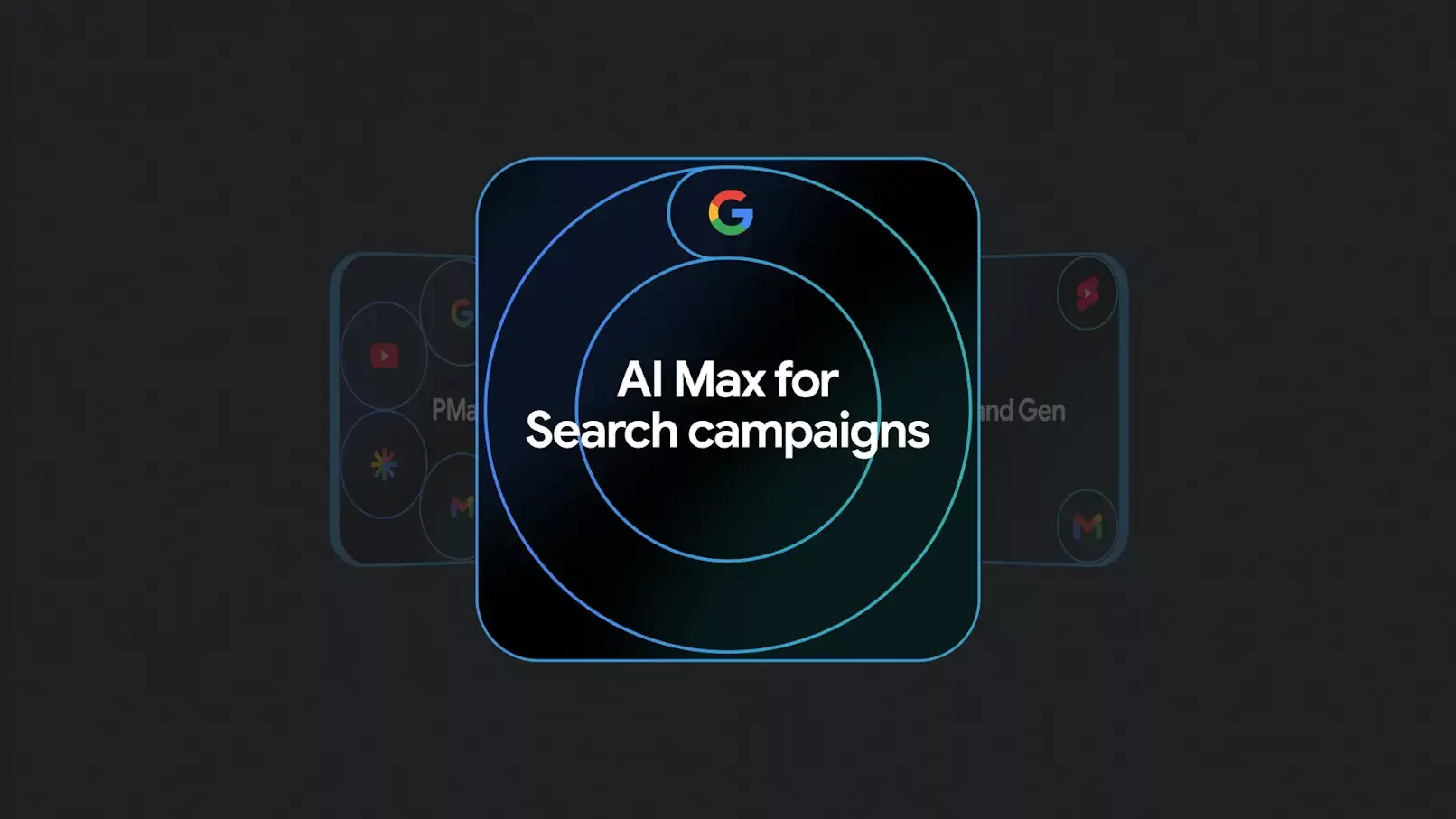
- AI Max for Search Campaigns: A one-click enhancement that allows Google Ads to target queries using your landing pages and assets (in Google's own research, they claim advertisers can expect to see 27% more conversions at a similar CPA when switching from phrase/exact to AI-Max powered search).
Google's stance is that traditional search campaigns are becoming obsolete. Advertisers must adopt these new technologies to stay relevant and drive better performance.
As with any current or past announcement of this magnitude, it's fair to say you want to take a big ol' scoop of salt - and experiment cautiously (but do experiment).
A single click ‘enhancement’ to your existing Search campaigns, AI Max claims to ‘supercharge’ your ads performance with AI targeting and creative enhancements.
2. YouTube Shorts is a major prospecting channel.
• Shorts now has 2B+ logged-in users monthly.
• 45% of Shorts users aren’t on TikTok, and 65% aren’t on Reels (based on GWI data).
• 58% of people said Shorts introduced them to a new product or brand.
In short (pardon the pun), brands can no longer ignore Shorts in their creative testing or prospecting funnel. It’s a clear opportunity to tap new audiences with performance creative and drive awareness.
3. Demand Gen & PMax have evolved.
Two thirds of the 'Power Pack'!
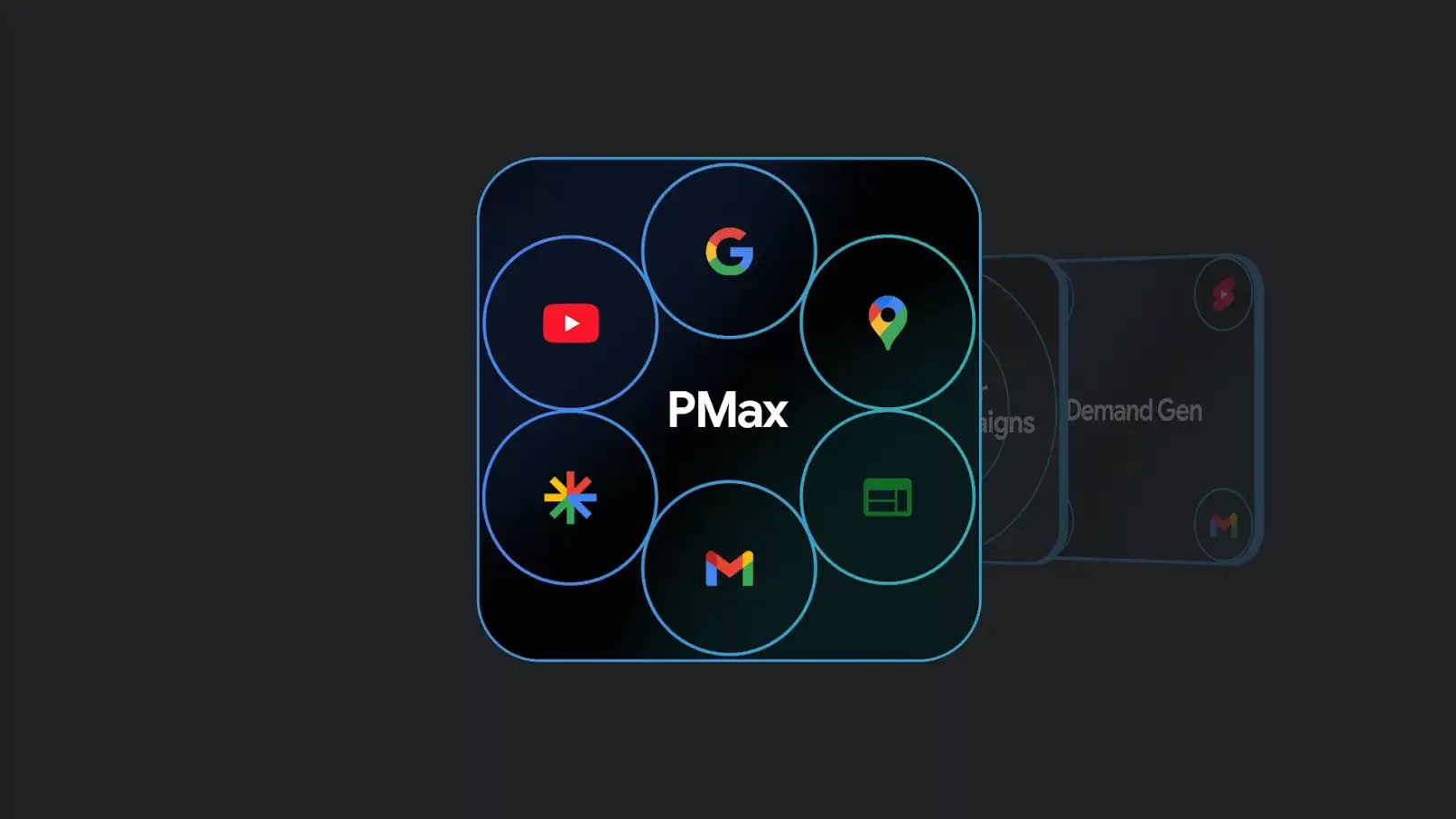 |  |
- Google revealed that over 90 improvements have been rolled out for PMax in the last year alone. More recently, we have seen widespread rollout of ‘Channel Reporting’ (finally), something that has come after many years of advertisers requesting more visibility and control into what’s happening ‘under the hood’ of PMax.
Additionally full search term reporting is being rolled out for PMax.
- New customer acquisition controls allow exclusion of audience segments such as existing customers, people searching for your brands, people who clicked on ads/content on Google or Youtube, as well as website and app users.
- Fortunately, the “black box” argument against PMax is fading. Agencies and brands can now use it with more confidence, gaining control and getting clearer reporting and ability to drive better performance.
- Drive discovery with new brand discovery ads within the SERPs on channels like Search and Google Shopping by adding high-quality video assets to your Performance Max campaigns.
- Demand Gen has delivered 26% increase in conversions per $ in the past year.

4. Creative is the performance lever (and AI Is fueling it).
- Launch of Asset Studio: allowing the ability to create image + video variations from existing product photos using GenAI.
- According to Google, AI-generated creatives now drive 7%+ uplift in conversion value in PMax campaigns.
- Generative video ads now being built and scaled inside Google Ads, using VO models.
So what does this mean? Your creative strategy is now integral to your media strategy. Brands must invest here and agencies must offer creative-as-a-service or risk stagnating as both technology and consumer behaviour continue to shift.
5. Measurement & attribution technologies are maturing.
- Launch of Meridian: new open-source Marketing Mix Modelling (MMM) tool built for cross-channel performance.
- View-through and cross-channel attribution improvements coming to GA4 - it will now also support Snapchat, TikTok and Pinterest attribution.
- New incrementality testing now accessible from €5,000 budgets.
- AI is being utilised to help connect first-party data and Data Manager now has an API.
Some of these updates are very interesting and can obviously add great value for advertisers, others I am a bit skeptical.
Incrementality testing with such small budgets raises questions around whether there will be sufficient data to reach true levels of significance.
My take on this is that it's Google's attempt to help improve adoption of channels like YouTube/Demand Gen, rather than something that will truly drive real impact for smaller advertisers. I hope to be proved wrong!
6. Shopping is being reimagined with AI.
- New AI-powered shopping experiences: try-on tools (very cool), conversational browsing, and agentic checkout.
- AI shopping ads will anticipate commercial intent even in non-shopping queries.
- 86% of purchase journeys already involve Google or YouTube.
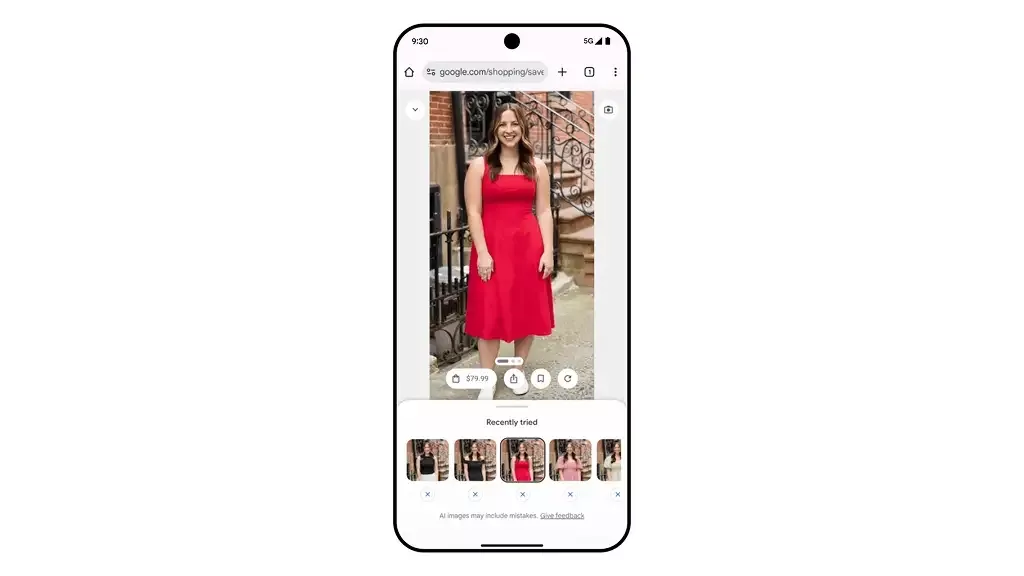
Clearly, AI is beginning to reshape product discovery. Agentic checkout is something that I think sounds great in practice, but I would imagine is not going to be largely met by resistance for now, and not without it's flaws for a while yet.
Summary
The event, as most Google events are, was heavily B2C centric and there were some question marks over how instrumental the majority of these features could be in the world of B2B.
As for my own summary of the event - it's moving us closer to the 'death of the keyword'.
What was very clear from the updates at both GML and I/O, is that this is a reality we may very much be moving forwards, and we’re certainly seeing the technology change to make strides towards a more personalised and nuanced experience for users.
Google is collecting data on you across a myriad of sources such as Search, YouTube, Gmail, Maps, Calendar and many more (even smart wearables) to better understand how to personalise your browsing experience - whether you're searching with AI Mode, traditional search or technology like Lens.
The future of search is no longer one-to-many, it’s one-on-one - very much personal. A pivotal shift for our industry.
With the sheer speed and scale of AI developments (and the noise that accompanies it) it's important more than ever to remain focused. To not to take anything as gospel. Question everything, test everything.
I'll sign off with my favourite and least favourite quotes from the event:
Favourite: "You don’t need a strategy for AI. AI is your strategy" - a stark reminder that it will touch every part of every business in some way, shape or form eventually.
Least Favourite: "Let's Rock 'N' ROAS!" (seriously? almost as bad as the 'power pair' chant)